
Game Design
Qhapac Nan
Project Name Qhapaq Ñan: The Chasqui's Path
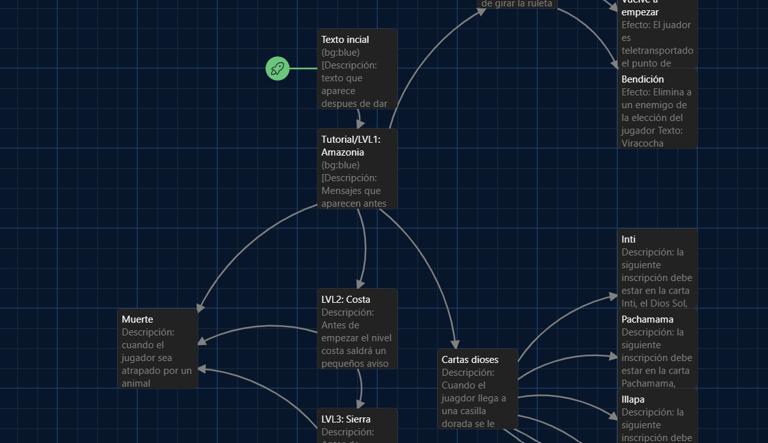
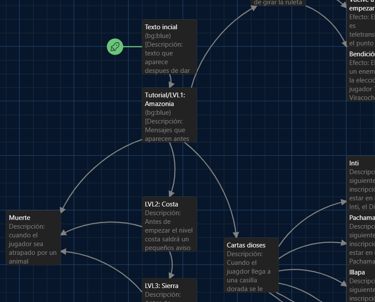
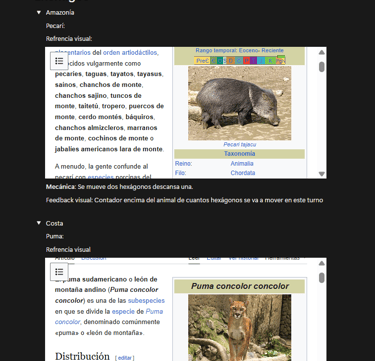
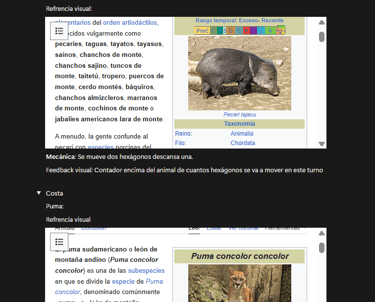
Brief Description A turn-based educational rogue-like designed for children (8-12 years old), based on Incan history and mythology. The project features modular hexagonal boards, distinct biomes (Amazon, Coast, Highlands), tactical enemy AI, and a dynamic "God Cards" system, all supported by a comprehensive and interactive Game Design Document (GDD).
Role Lead Game Designer, Level Designer, and Narrative Designer. Responsible for systems design and balancing, conceptualizing procedural generation rules on hexagonal grids, mapping narrative branches, and creating an extensive, developer-friendly GDD.
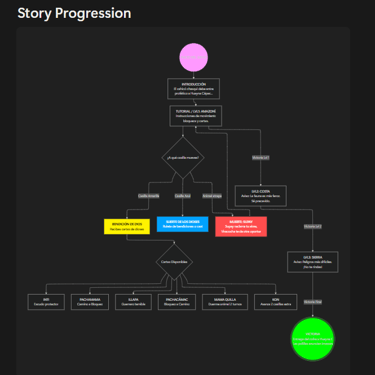
Technologies Notion (GDD Database & Wiki), Twine (Interactive narrative architecture & logic flow), Microsoft Word (Isolated copy for UI implementation) Unity(Desing gray box and test differente values).
Problem or Need Addressed The lack of highly engaging and interactive resources for teaching Andean history and geography in schools. The project solves this by translating cultural myths into a gamified, tactical rogue-like experience that encourages strategic decision-making and learning through discovery.
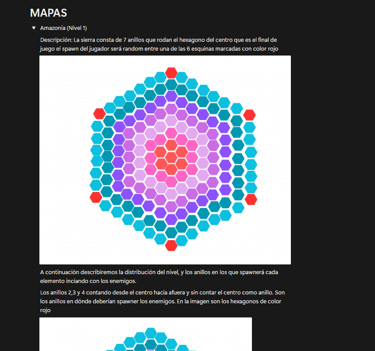
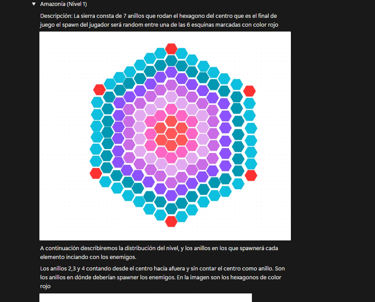
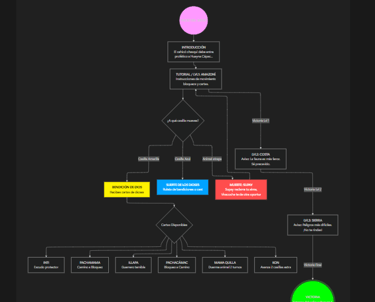
Results Delivered a professional-grade, highly visual Game Design Document optimized for developer experience (DX). Successfully balanced complex rogue-like mechanics for a younger audience and provided unambiguous implementation rules, modular spawning rings logic, and clear narrative trees to prevent production bottlenecks.
Game Design
De la mancha
Project Name De la Mancha
Brief Description Brief Description A split-screen cooperative puzzle game where Don Quixote and Sancho Panza escape the pages of their book, navigating parallel realities to solve obstacles together. The experience contrasts Don Quixote’s colorful 2.5D fantasy world—populated by dragons, monsters, and chivalric threats—with Sancho Panza’s grounded 3D desk reality filled with real-world objects like erasers, ink, and coffee stains. Through an interdimensional machine pipe connecting both screens, players trade items that adapt to each character's perception (e.g., Sancho feeds a simple rope into the device, which arrives in Quixote's world transformed into a living snake), demanding asymmetric communication to clear path blockades.
Role Role Lead Game Designer & Concept Creator. Conceived the original concept, core dual-reality loop, and asymmetric cooperative dynamics; designed environmental obstacles, puzzle logic, and object transformation rules. Note: Focused strictly on design systems and documentation without involvement in code implementation or visual asset production.
Technologies Miro (Puzzle flowcharts & cooperative sequence mapping), Notion (Game Design Document & item transformation matrix), Google Docs / Sheets (Obstacle progression, puzzle pacing tables, and system design specifications).
Problem or Need Addressed The lack of cooperative puzzle mechanics that leverage asymmetric perception and literary themes. The project addresses this by gamifying Don Quixote’s famous delusions, turning perspective disparity into an active gameplay tool where neither player possesses the full picture or the exact tool they need without the other.
Results Winner of Global Game Jam (Cuenca site). Successfully conceptualized and structured a complete puzzle progression system based on trans-dimensional item exchange. Produced detailed design blueprints, puzzle logic flowcharts, and clear mechanic guidelines that enabled programming and art teams to align smoothly on game feel, dual-camera synchronization, and environmental blockers.


Game Design
Cooking Animals
Project Name Cooking Animals
Brief Description A fast-paced, forest-themed chaotic culinary game inspired by the Overcooked formula, set entirely on the dynamic surface of a rotating hollow log. Players control a small forest creature collecting wild ingredients such as ants and caterpillars to fulfill timed recipes. The gameplay loop demands sharp spatial navigation and multitask management, requiring players to process ingredients through specialized stations—transforming caterpillars in chrysalis leaf cocoons or coating insects in honey dishes—while constantly dodging lethal hollow gaps and rotating pitfalls along the rolling trunk to complete deliveries at the pickup station.
Role Lead Game Designer, Concept Creator, and 3D Artist. Conceived the original high-concept and core rotational gameplay mechanics; designed the order fulfillment flow, ingredient transformation cycles (cocooning, honey-glazing), and hazard positioning (perilous gaps and trunk rotation timing). Modeled all original low-poly 3D environmental assets, interactive stations, ingredients, and character props. Note: Focused strictly on game design, balancing, and 3D art modeling without involvement in code implementation.
Technologies Blender (Low-poly 3D asset modeling, UV mapping & environmental props), Miro / Notion (Core gameplay loops, recipe state machines & interactive design documentation), Unity (Design blockout, spatial testing, and rotational physics evaluation).
Problem or Need Addressed The lack of dynamic spatial hazards in traditional fixed-floor cooperative/time-management cooking games. The project solves this by replacing flat, static kitchens with a cylindrical, continuously rolling terrain where gravity, shifting openings, and rotating delivery zones force players to adapt their pathfinding and recipe-prep timing on the fly.
Results Successfully prototyped and delivered an engaging time-attack culinary prototype featuring a unique rotating log mechanic. Created a full, cohesive low-poly 3D art suite optimized for top-down visibility and provided precise recipe transformation balance sheets and hazard layouts that ensured fluid gameplay flow and intuitive onboarding.


Game Design
Valentina
Project Name Valentina
Brief Description A narrative-driven stealth and atmospheric puzzle-adventure game following the emotional journey of two refugee siblings navigating a war-torn, bandit-occupied city. Grounded in a poignant diary narrative and voice-over storytelling, the experience combines stealth navigation, environment-based puzzle solving, and resource scavenging. Players must explore dilapidated urban spaces, find tools to clear obstacles (such as ladders and mechanisms), and manage sibling dynamics while evading hostile patrols in a tense atmosphere centered on trauma, survival, and memory.
Role Lead Game Designer, Narrative Designer, and Level Designer. Conceived the original concept, core mechanics, and emotional progression; authored the narrative arc, contextual voice-over lines, and in-game environmental storytelling. Architected stealth encounter layouts, pacing, patrol routes, and spatial puzzle blockouts to seamlessly integrate mechanical tension with narrative beats. Note: Focused on design systems, narrative structure, and level blockouts without involvement in final code implementation or raw visual art production.
Technologies Twine / Notion (Interactive narrative branching, diary script architecture & game design documentation), Miro (Level flowcharts, stealth pacing & encounter mapping), Unity (Greyboxing, level blockout, camera framing, and mechanic pacing evaluation).
Problem or Need Addressed The difficulty of translating sensitive wartime refugee experiences and familial trauma into an interactive medium without trivializing the emotional gravity. The project bridges this gap by intertwining vulnerability with stealth gameplay—prioritizing quiet traversal, sibling dialogue, and atmospheric tension over combat to evoke deep empathy.
Results Successfully designed and paced a functional, deeply atmospheric vertical slice demo. Delivered a coherent Level Design & Narrative Design framework that aligns environmental hazards, dialogue triggers, and stealth mechanics into a unified player journey, effectively showcasing the project's emotional and commercial potential.


